
绿野
外交部发言人汪文斌向世界推荐!揭秘00后“峨眉女侠”组团出山的台前幕后_我的网站

A |
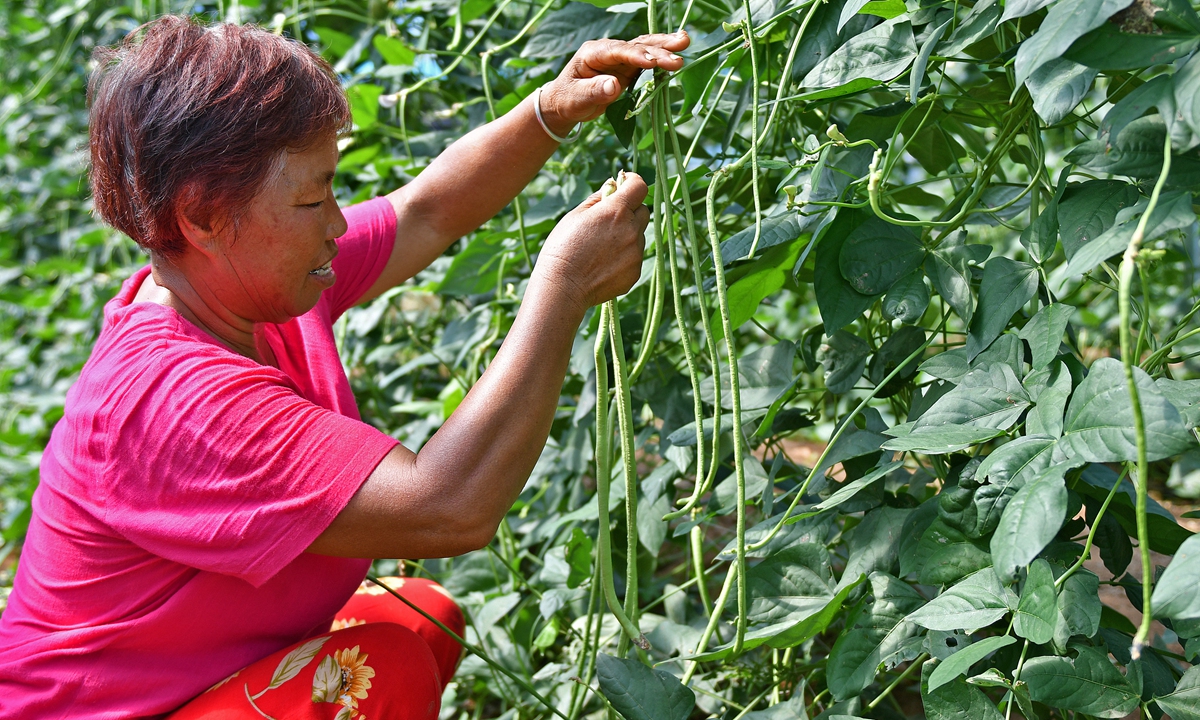
For residents of East China's Shandong Province, however, green beans have never been a miracle diet food or an internet meme. Instead, they are an unmistakable sign that summer has arrived — and, for many families, the beginning of weeks of eating them, giving them away and wondering how on earth there are still more waiting to be picked.
The season of endless beans
For Zhao Qian, a Shandong native, summer has always had a familiar color: green.
"When I was little, the moment different bean dishes started appearing on the table day after day, I knew summer had arrived," Zhao told the Global Times. "No matter how many we ate, there were always more. It was as if the vines kept producing beans overnight."
A Chinese saying goes, "Eating beans in summer is better than eating meat." Heat-loving green beans have been cultivated in China for more than one thousand years. Originally introduced from abroad, they gradually found a permanent place on Chinese dining tables thanks to their versatility, nutritional value and ability to fill hungry stomachs, according to an article published by People.cn.
Today, with the rise of greenhouse farming and an increasingly sophisticated cold-chain logistics network, fresh vegetables are available year-round across China. The old rule of eating produce only in season has largely given way to year-round abundance. Yet in Shandong, China's largest vegetable-producing province, green beans remain inseparable from summer. More than an endless seasonal harvest, they have become the taste of home for generations of locals.
One of Zhao's strongest childhood memories wasn't eating the beans, but preparing them.
"Every summer, the adults would hand me a basin full of freshly picked beans and ask me to strip off the tough strings along both sides," she recalled. "I'd sit on a little stool and work through the whole pile. It looked like an easy job, but after peeling bean after bean, my fingertips would start to hurt. By the time I finished one basin, there was always another one waiting."
For many families in Shandong, summer means an endless cycle of picking, eating and sharing green beans. In vegetable gardens, rows of trellises are soon covered in climbing vines. When the peak harvest season arrives, the beans need to be picked almost every day before they become old and fibrous. Those that cannot be finished at home are packed into bags and given to relatives, neighbors and friends.
"Your family has beans, and so does mine, but we still give them to each other," Cao Yu, a Shandong native who grew up on the Jiaodong Peninsula in East China, told the Global Times on Wednesday with a laugh.
A plentiful harvest also brings what locals jokingly call "bean freedom" to the dinner table. Sesame-dressed beans, braised beans with pork ribs and, above all, bean-filled steamed buns — a dish mentioned by almost every Shandong native interviewed by the Global Times. For many people, these dishes are no longer simply seasonal food, but the familiar taste of summer, family and hometown.
The hands that harvest summer
Behind the seemingly endless harvest is another busy summer ritual — picking. For many elderly farmers, harvesting green beans means spending hours each day moving from one trellis to another, reaching through dense vines and picking bean after bean by hand.
A nail salon in Jining, Shandong Province, recently went viral after offering free "bean-picking manicures" to residents aged 60 and above. Instead of fashionable designs or glittering decorations, the salon applies thicker, longer nail extensions that make it easier to pinch and snap off the beans while protecting fingertips from pain. A coat of colored polish is added simply to help conceal stains left by vegetable sap, according to video clips circulating on Chinese social media platforms Douyin and Sina Weibo.
The salon owner, herself the daughter of farmers, said thumb injuries and damaged fingernails are common during the bean-picking process. In videos posted on her Douyin account, many elderly women said the manicures made picking beans much easier. Even more amusingly, some older men initially refused to get a manicure, only to change their minds after hearing enthusiastic recommendations from the "grandmas' group."
For perhaps the first time, beauty took a back seat to practicality, and a manicure became another way of caring for hardworking hands.
While the internet continues to joke about undercooked beans as a shortcut to weight loss, doctors stress there is nothing amusing about eating them raw. Liang Jiajing, a clinical nutritionist at the Second Affiliated Hospital of Anhui Medical University, said raw or undercooked beans contain naturally occurring toxins that can cause nausea, vomiting, abdominal pain and diarrhea, but the toxins are destroyed through thorough cooking, according to a Jimu News report.
The internet may remember green beans as the latest viral "weight-loss hack." In Shandong, however, they tell very different stories — one of overflowing harvests, bags of beans exchanged between neighbors, family recipes passed down through generations, and hardworking hands that quietly bring the harvest to the table. Long after the online jokes fade, the taste of summer — and of home — remains.
。
“中国武侠小说里的女英雄!看峨眉女侠如何惊艳全场。”5月中旬,外交部发言人汪文斌在社交平台上发布一则视频消息,向全世界推荐峨眉派女侠。

B |
5月17日,封面新闻记者在峨眉山见到了这群女侠——峨眉派女子功夫团。
该团负责人李洁瑜告诉记者,汪文斌发布的视频,是她们5月3日发布的概念片《武韵峨眉》。片中,功夫团大师姐、峨眉武术非遗传承人凌云,携手8位零零后师妹,共同演武峨眉武术。
“师妹们都有英雄梦,也都在用自己的行动,诠释着英雄的精神。”李洁瑜说。
汪文斌的推荐引起国内外网友点赞。在国外,有网友留言称:“this is China…this is Chinese ”并附上“爱心”的图案,也有网友称:“So beautiful”,还有网友用中文点赞:“好功夫,女孩们太帅了”。
在国内,同样引发广泛关注,有网友称:“火到国外了”,也有网友留言:“文化输出,让世界好好看看”。
“这个片子是师妹们的首部概念片,以峨眉刺为主,也有枪、剑、拳脚等内容。重点展示峨眉武术‘一树开五花,五花八叶扶’的武术精神。”李洁瑜称,“一树”便指峨眉武术,“五花”指峨眉武术五大流行区域派别:青城派、铁佛派、青牛派、点易派及黄陵派,“八叶”指峨眉武术八大主要门派:僧门、岳门、赵门、杜门、洪门、字门、化门、会门。

C |
视频中,凌云和功夫团的师妹们手持扇、伞、枪、剑等武器,在室内、竹林、园林等地方演武峨眉武术,最后共同演武峨眉刺,并在短片中宣称:“我们为青春而来,撕掉被定义的标签。既然不知道未来是什么样子,那就亲手塑造一个属于我们的未来。”
“片中,除了功夫团的大师姐是九五后外,其余师妹都是零零后的。”李洁瑜告诉记者,功夫团于4月29日,在峨眉武术传承大会上揭牌。目前,还在面向社会招募成员。
在教练董广看来,峨眉派女子功夫团是一群怀揣武侠梦的零零后女生。杜卓滨 摄
据功夫团公开的招募信息显示,入团的师妹们都拥有8年以上的“武术或舞蹈功底”。
用教练董广的话说,是一群“怀揣武侠梦的零零后女生。

D | ”
“非常刻苦,每个人意志力都很强。

E | ”董广介绍,师妹们吃、住、训练都在峨眉山,每天训练6个小时,上午练武术基本功,下午学习峨眉武术招式。“隔三差五回到峨眉山上,在山林间进行训练。”
董广称,峨眉武术发源于峨眉山,只有坚持传承不守旧,创新不离宗的理念,不时回到峨眉山,“才能真正领悟老祖宗传承下来的精髓和真谛。”
“很辛苦,但师妹们的状态都非常积极,以腿法训练为例,峨眉武术的四种基本腿法,每天会练习上千次。”董广说:“这还仅仅是单个项目的基本训练。

F | ”
面对英雄一词,功夫团的师妹们并没有太在意。在李洁瑜看来,师妹们现在还算不上英雄,“都在用自己的行动,诠释着英雄的精神。

G | ”
“提到英雄,我们总觉得应该是做了很多大事,契合‘侠之大者,为国为民’的定义。但不全是这样。

H | ”李洁瑜称,在功夫团看来,英雄不分大小,做了大事的是英雄,长年兢兢业业,坚守自己岗位,对事、对人负责也是英雄。“我们女子功夫团不强求一定要做大事,成大业,只要求认真对待每一次训练,对待每一次演武,以峨眉武术为载体,讲好中国故事。

I | 用自己的行动,诠释武术精神,诠释英雄的精神。”
李洁瑜称,女子功夫团并没想过要“挑战武林”,“我们更侧重于武术表演,在海内外宣传峨眉武术,传递峨眉武术‘海纳百川,刚柔并济‘的武术精神。”
记者注意到,女子功夫团的师妹们除了要学习峨眉武术相关的拳法、掌法,兵器,还要接受声、台、形、表的相关课程训练,“感受、体验武术的奥妙,然后进行专业的演示,实现传统文化的破圈传播。”
据公开资料显示,峨眉武术是与少林、武当齐名的中华三大武术流派之一,是我国非物质文化遗产的宝贵财富。

J | 它以四川峨眉山为发源地,历经起源、发展、鼎盛和传承时期,距今已有2000多年历史。

K | 它集儒、释、道中华传统文化为一脉,巴蜀地域文化为一体,形成了峨眉武术独具的“刚柔并济、内外兼修”的武术风格。

L |
Current article:http://85l43l.mexuanmeixuyaopinzheng.shop/84hgtvv/g8q.html
Published on:16:57:27
我的网站相关内容
 四川航空3U3838航班,凌晨紧急备降济南!
 恭喜!41岁C罗宣布与乔治娜低调结婚 晒两人戴婚戒照 已相恋10年
 施罗德:2028年薪水会大涨 或能拿千万合同
- 上海楼市“沪八条”施行 新政组合拳激活消费需求,上海楼市“沪八条”施行 新政组合拳激活消费需求
 国产风电海外爆单行业有望迎海外+国内共振机会
 赵心童遭4连鞭!无缘决赛
- ·青年说|湿地听鸥鸣 青春护生态
- ·俄联邦安全局逮捕一名男子,其涉嫌为乌方收集俄军事设施相关信息
- ·『鉄腕DASH』、冬の名物企画に“TOKIOの後輩アイドル”大量投入で募る日テレへの不満…早くも見えた松岡昌宏降板の“痛手”
- ·拼多多平台海纳家用电器海尔授权作假,发残次品
- ·祈年幻兽焕新觉醒 《魔域》2026 年 99 狂欢节重磅首曝
- ·神州G8光超笔记本预售:17.3英寸/RTX 206094999元
- ·2025年京东618将于5月30日晚8点正式开启!补上加补 福利多多!!
- ·美军重返菲律宾,菲渔民:美军来了,中国就有顾忌不敢再咄咄逼人,刘朝勋教授,原创 美军重返菲律宾,菲渔民:美军来了,中国就有顾忌不敢再咄咄逼人
我的网站最新内容
- ·Sandis Compound में डीजे साउंड के साथ कर सकेंगे Rain Water Dance, भागलपुर में खुलेगा Top Water Park और चिड़ियाघर
- ·11年膨胀了575倍,手机APP安装包为什么越来越大?_大小_体积
- ·Here Are 18 Most Romantic Bollywood Dialogues to Celebrate Love This Valentine's Day
- ·夢想吉「星」高照
- ·Shane Nigam’s Haal Finally Clears Legal Storm, Sets Course for a December Release
- ·二十五载汉语为桥 五洲青年厦门逐冠
- ·东方环宇:上半年归母净利润1.23亿元,同比下降0.78%
- ·China's gold investment demand rises as jewelry buying weakens
- ·“小米赛车”1月15日公开测试:泵送100纪念版米粉车
- ·外交部谈机器人大会:中国底层逻辑始终是开放合作、互利共赢 而非封闭独占
- ·WOW!史诗级交易方案!状元联手小卡+巴恩斯!费城遇到对手了!
- ·韩国明年禁吃狗肉 超8成民众支持!食客禁令前排队猛吃
- ·英伟达带头冲锋800V直流,功率芯片厂商迎来新机遇
- ·Chinese Long March-8A rocket launches new internet satellites
- ·US president’s order to scale back military exercises with S.Korea signals intention to ease tension on Korean Peninsula, return to ‘direct diplomacy’ with Pyongyang: experts
- ·台风“沙德尔”步步逼近 预计明天夜里到后天登陆 杭州将迎来一次风雨过程
我的网站热点内容
- ·'I felt like I just started my career again': British Elvis revivalist finds his voice in China
- ·微星 Katana 15 HX C14 游戏本上市:至高 14900HX + 5070,170W 性能释放
- ·流动性麻烦,会打出深坑吗?
- ·国产最强芯片!小米玄戒O3已开启规模化量产
- ·爷青回!31年经典IP再现,《英雄无敌3》重制版官宣
- ·成都住房公积金新政今起施行,最低首付款比例降至15%
- ·京津冀零碳产业联盟成立
- ·Northeast China jellyfish industry expands global reach
- ·买“加速包”可优先购票?12306回应→
- ·相比美国其他地区,底特律更离不开加拿大
- ·人类400米世界纪录被机器人全面超越,天工Ultra机器人以39.70秒的成绩位列第一
- ·持续深改焕新颜砥砺奋进谋发展——记市先进集体葫芦岛宏跃集团
- ·四川广元:千佛崖石窟热度高涨 暑期游客纷至沓来
- ·林书豪、郭士强一人带一队?中国男篮重启姚明旧政,或许真能重新崛起!
- ·小花钱包放款当日扣权益卡钱诉求退还3170元代扣费用
- ·2岁女童意外坠楼,妈妈听到惊呼声下楼后才发现!一男子徒手去接:孩子没撑几秒就掉下来了,自己一度感觉胳臂抬不起来